Showing posts with label western cultures. Show all posts

Thursday, 15 January 2015

In A State of Constant Flux


Flux...

Digital manipulation, 2014
In the West we have an unquenchable desire for new and exciting products to buy.  Creators of consumer goodies often look to other cultures for ideas that are new and exotic.  However, the problem with this is that the original cultural meaning is skewed and distorted in order to make it fit our market's needs. 
Retrieved from Pixabay

To its original creator the myth of Cupid and Psyche had important social and cultural meanings.  The idea of the classically beautiful star crossed lovers and their struggle to unite appeals greatly to us. 

For some reason the figure of Psyche has been dropped by consumer culture, despite our love of using the female body to market and sell a multitude of products.  The West has taken the figure of Cupid and turned him into a heavily stylised  cherub.

The Desolation of Cupid explores the journey of Cupid from his original purpose and form to what we now understand as being Cupid.

The artwork above is from Desolation of Cupid and attempts to describe the transformation process that occurs when Western consumer culture turns the meaningful into the consumable.  Cupid has become no more than a dumbed down icon that producers assign to products in order to entice us to buy.

Figure stock by Felix d'Eon
Texture by Arkano3
Any copyrighted material used on this blog remains the property of the original owner and is used under the Fir Dealing Australia Act for the purpose of critique and review.

Sunday, 18 May 2014

The Consuming West


Katelyn Parker
Mixed media digital painting, 2014

As governments in the West begin to tighten purse strings and to stimulate growth in their economies times have become tight for all.  The consumer economy responds by increasing the pressure on individuals to continue to buy, buy, BUY.

Advertisers find even more devious methods of intensifying our desire for the latest products. The pressure to buy is intense, and constant.

Are consumers victims of consumer culture?

Or are we villains?

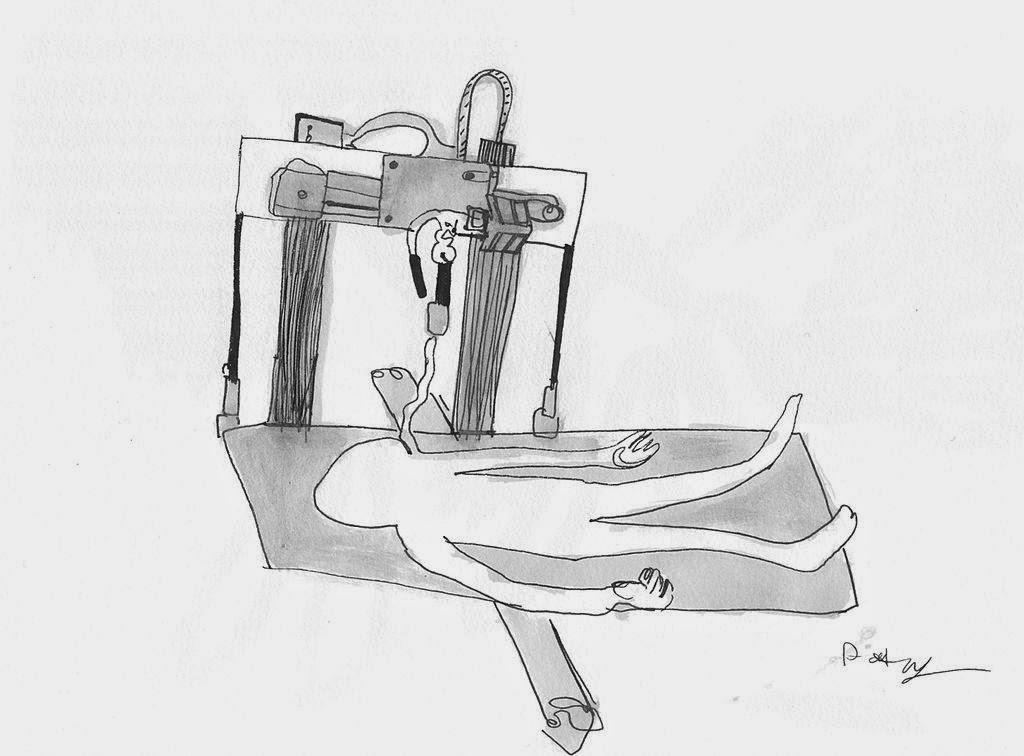
Although we know that an increasing amount of goods are made using slave/child labour, we seem to be able to navigate our way around the ethics and morality issues and continue to buy from companies that have been exposed as employing slavery to increase their profit margins.  Our complicity in the continuation of slave labour makes it difficult to position consumers as victims of consumer culture.  The real victims continue to be those that suffer working in unsafe and often brutal working conditions in order to satisfy the west's appetite for new things to buy.  This digital artwork came about after doing research into practices of slavery that exist today.  The stories and videos I have read and seen tell of kidnappings, routine brutal beatings, withholding of pay and identity documents and other abuses that largely go untouched by mainstream news outlets.  The artwork above was a response to the vulnerability of a group of individuals that have absolutely no power to change their position in life.  

At least consumers have choice, we do not have to buy.  This makes it difficult to position consumers as victims of consumer culture.  However I don't know that it makes us villains either.  


Unless otherwise stated all images have been sourced from Wikimedia Commons and have been assigned a Creative Commons Attribution Share-Alike License or are from the Public Domain
All of my artworks unless otherwise stated are shared under a Creative Commons Attribution Share-alike license (Version 4.0 (international licence)


Friday, 16 May 2014

The Price Paid - Part Two


We are relying more and more on technology in more and more aspects of our lives.  For business, social and entertainment we are quick to reach for the latest gadget.  But the workforces that are employed to produce those gadgets do not even earn enough to buy one of the products they spend 60 hours a week assembling.  In a video on Live Leak a young woman is handed an I-Pad that she should be intimately familiar with, after all she spends 60 hours every week contributing to making the devices.  She smiles as she handles the device, there is almost an element of pride in the workmanship of the sophisticated device.

Logo: Ross Justin00
Wikimedia Commons
This faceless workforce goes largely unconsidered  by those in the West that actively and almost religiously consume the latest and smartest technology.  This video gives a very human face to the workers.  With her identity concealed she speaks freely about how hard the worker's are pushed physically, the long hours and the volume of work that they are expected to complete during their shift.   

The culture is one of obedience and surveillance and workers are instructed to never talk to the media.  The young woman compared her life to that of an animal, only having enough time and energy to work, eat and sleep.  The major players are very quick to issue media releases to say they have INVESTIGATED issues and that they value every single one of their employees.  But this one employee stated clearly that she did not feel valued or looked after.  She also had no voice with which to make herself heard.  In the West this workforce is voiceless and faceless as mainstream news outlets never investigate or research the stories of those that fill our consumer markets with new technological gadgets and devices for us to desire and consume.


Unless otherwise stated all images have been sourced from Wikimedia Commons and have been assigned a Creative Commons Attribution Share-Alike License or are from the Public Domain
All of my artworks unless otherwise stated are shared under a Creative Commons Attribution Share-alike license (Version 4.0 (international licence)

Thursday, 15 May 2014

I Need and Want


The difference between need and want is no longer that clear.  Consumer Culture is created and re-created in new and exciting ways that make us confuse WHAT WE WANT  as being something we need.


Saturday, 3 May 2014

The Meaning(less) Distance


Consumerism has become so built into our every day lives that we don't often stop to think about the affect that our desire to consume might be having on others.  The advertising industry works away at us so covertly that we are able to justify our desire to have the latest as being more important that anything else.


For this series of art works I am using the way that consumer culture has adopted the figure of Cupid to stamp all over its products and services that might have anything remotely to do with love, desire or romance.  The commercialised nature of Cupid offers a very dis-jointed and diluted version of the original myth, often edited down to a mere silhouette.  All of the original depth and meaning is removed in order for commodity producers to fit the figure to thier market demographic.  In this digital and mixed media work I was trying to express just that, the wings or meaning are removed from the body and parts covered up in a type of editin


Photographic figure stock by Devoman1948
Unless otherwise stated all images have been sourced from Wikimedia Commons and have been assigned a Creative Commons Attribution Share-Alike License or are from the Public Domain
All of my artworks unless otherwise stated are shared under a Creative Commons Attribution Share-alike license (Version 4.0 (international licence)

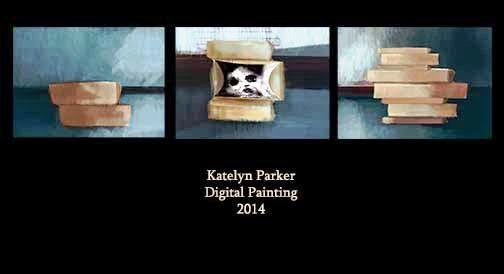
Boxed up by consumerism


Just recently, several times in the same week, I came across businesses and TV shows that were using a Native American Chief's head dress in ways that deeply offended the original owner's cultural beliefs.  All of the instances displayed incredible arrogance and insensitivity to the Native American community.  In one of the cases a very successful Australian photography business that offer the customer a complete package of hair, make up, costume and a final portrait were using the head dress as a ill considered prop.  In the sample portrait on their website the head dress was being worn by a young, white female.  Our consumer culture is so very often guilty of insensitivities such as this.  The piece of art work above was created shortly after seeing the portrait of the young woman and reflects on the way that consumerism strips away original meaning and packages it up in a way that suits its own market driven needs.

Unless otherwise stated all images have been sourced from Wikimedia Commons and have been assigned a Creative Commons Attribution Share-Alike License or are from the Public Domain
All of my artworks unless otherwise stated are shared under a Creative Commons Attribution Share-alike license (Version 4.0 (international licence)

Saturday, 26 April 2014

Production, Consumption and the New Industrial Revolution


3D Printing and the New Industrial Revolution


Illustration by
OR drowhowa Wikimedia commons
There is no doubt that technology is taking us into new and exciting territory.  Victoria Craw wrote recently in a News.com article that 3-D printer technology is set to become the new industrial revolution.  In the article Dominic Parsonson, Tasman Machinery’s national sales manager, pointed out that the only limit to 3D printers is whether or not they are able to process the material used to manufacture the product.  This technology is an exciting, and advantageous, development for countries like Australia where high wages and the legal responsibilities of using a local workforce to manufacture at home has meant that we've outsourced our manufacturing to countries that can offer large workforces at a cheap price.  This outsourcing has had a huge impact on our economy and our manufacturing industries have become a distant and historical memory.  Our shop shelves are now largely filled with products made overseas.


The Forgotten Workforce

So what will the consequences of this exciting new technology be for the workforces that we have been using
Factory workers
Wikimedia Commons
to fill our consumer marketplace with a constant supply of new products if 3D printing makes it viable for us to manufacture locally?  Harvard Business Review author Richard A. D’Aveni 
suggests that the factors that have made countries like China the “workshop of the world”  will lose their impact as the West becomes able to produce goods closer to the location where they are to be consumed.  For counties such as China who have built economies that depend heavily on providing the west with cheap labour the effects of 3D technology could be catastrophic.  For the workers it will be felt even more so.  For these workers there will be no safety net to break their fall when they are made redundant when their labour is no longer required by the west.  There will be no welfare system to tide them over until they can retrain themselves for other work and little or no support to retrain.


For many years now the west has used these work forces to saturate their consumer marketplace with new commodities and build up strong economies.  If our western manufacturers adopt 3D printing technology and begin to produce goods locally our own economies will flourish as more people are employed locally in the manufacturing sector to fill our store shelves.  But what will the human cost be for the workforces that currently produce the goods that stock our shelves?

It all bears thinking about as we stand at the cusp of the new industrial revolution.


Unless otherwise stated all images have been sourced from Wikimedia Commons and have been assigned a Creative Commons Attribution Share-Alike License or are from the Public Domain
All of my artworks unless otherwise stated are shared under a Creative Commons Attribution Share-alike license (Version 4.0 (international licence)